

Rapidly Aging U.S. Population
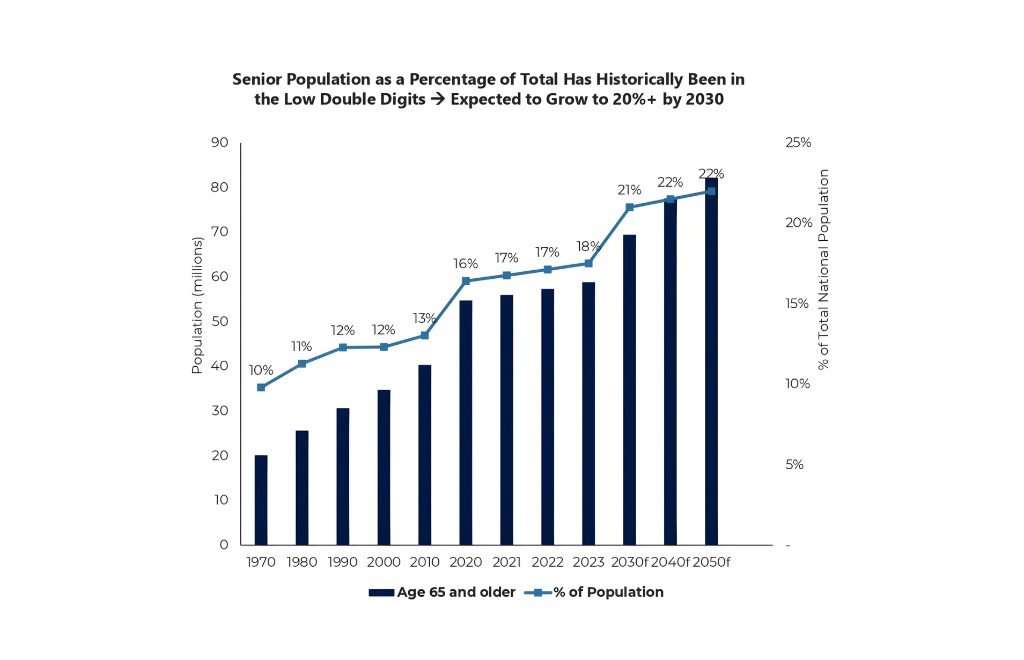
The 65+ population is on track to grow roughly 1.4× by 2050. In California, the 80+ cohort is among the fastest-growing demographic groups — driving durable demand for care-enabled housing.
Market Opportunity
Five converging forces make this the optimal moment to develop senior housing in the Bay Area.
Five converging forces make this the optimal moment to develop senior housing in the Bay Area.
The 65+ population is on track to grow roughly 1.4× by 2050. In California, the 80+ cohort is among the fastest-growing demographic groups — driving durable demand for care-enabled housing.
Senior living has led commercial real estate in rent growth, including roughly +3.8% in 2024 — a signal of pricing power in a needs-based sector.
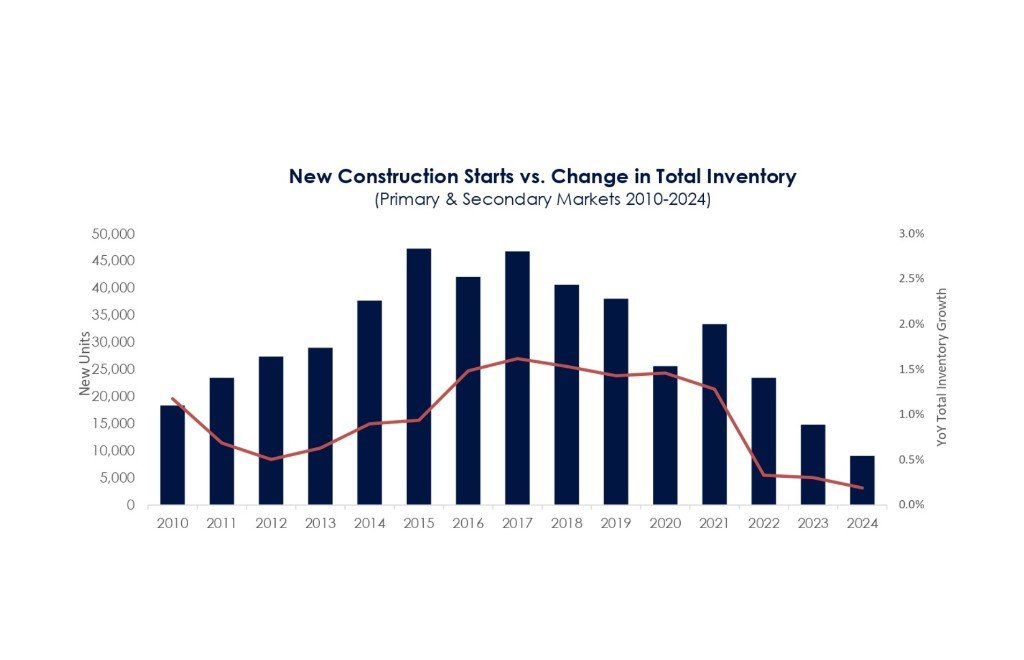
New construction has declined for much of the past nine years while occupancy nationally sits above 90% — classic supply constraint against rising need.
Emerald Park’s revenue model is anchored in California’s Assisted Living Waiver (ALW) and related Medi-Cal pathways — payment streams tied to entitlement programs, not discretionary family spend.
Occupancy for frail seniors is driven by biological necessity more than economic cycles. Demand for care does not disappear when markets correct.
| Traditional Private-Pay Assisted Living | Emerald Park: Government-Backed Model |
|---|---|
| Revenue depends on private families paying $10,000–$15,000/month | Revenue paid directly by Medi-Cal, ALW, CalAIM programs |
| Occupancy drops during recessions as families pull residents | Government funding continues regardless of economic cycle |
| Heavy marketing required to attract and retain residents | 12,000+ waitlisted residents = zero marketing cost to fill beds |
| Highly competitive — saturated private-pay market in Bay Area | No private-pay competition — completely underserved segment |
| Vulnerable to stock market declines and economic downturns | Recession-proof: seniors don't stop needing care in downturns |
Emerald Park’s financial projections are based on a conservative 85% occupancy rate. The actual Bay Area senior housing occupancy is running at 90%+, giving a meaningful margin of safety on all return projections.